I quick guide to the documents that are available to the public in your area.
Major Archives of Ontario Collections on Microfilm include:
•Vital Statistics:
•Births: 1869 to 1912
•Deaths: 1869 to 1937 (Older than 70 years : 1938 and up will be released soon.)
•Marriages: ca. 1780 to 1927 (pre-1869 records are very incomplete)
•Wills and Estate Files: c. 1790 to 1930 (dates will vary depending on the county).
•Newspapers: The Archives has microfilmed most of its newspaper holdings, including a large selection of older Ontario newspapers.
•Eaton's Mail-order Catalogues: 1884-1976
The Archives also provides access to some Library and Archives Canada microfilm including:
•Ontario Census Returns: 1842, 1851, 1861, 1871, 1881, 1891, 1901
•Upper Canada Land Petitions: 1792-1867
•Ships Passenger Lists: 1865-1919

Searching your roots one step at a time
Tuesday, April 6, 2010
Wednesday, March 24, 2010
How to find a will at the archives of Ontario
Step by step instructions on how to find a Last Will and Testament
Are all Wills in the court records?
No. If the deceased's estate consisted ONLY of real estate (e.g., farmers), the original Will may have been deposited in the local Land Registry Office to transfer the land to the heirs. Some Land Registry Offices hold over 60% of all surviving Wills. Because they were never probated, these Wills are not indexed or registered in the court records. Consult Inventory 61 (Private Property Registrations) for further details.
Why should I be looking for an "Estate File" rather than a Will?
An Estate File contains the documents used by the Surrogate Court to disperse the deceased's estate, whether he/she died with (testate) or without (intestate) a Will. The contents can include: Petition for Probate (with Will) or Administration (without Will), the original Will, the executors' or administrators' oaths, and an inventory of the assets (see the glossary at the end of this Guide for further details).
Are all Wills in the court records?
No. If the deceased's estate consisted ONLY of real estate (e.g., farmers), the original Will may have been deposited in the local Land Registry Office to transfer the land to the heirs. Some Land Registry Offices hold over 60% of all surviving Wills. Because they were never probated, these Wills are not indexed or registered in the court records. Consult Inventory 61 (Private Property Registrations) for further details.
Why should I be looking for an "Estate File" rather than a Will?
An Estate File contains the documents used by the Surrogate Court to disperse the deceased's estate, whether he/she died with (testate) or without (intestate) a Will. The contents can include: Petition for Probate (with Will) or Administration (without Will), the original Will, the executors' or administrators' oaths, and an inventory of the assets (see the glossary at the end of this Guide for further details).
Thursday, February 25, 2010
Who Do You Think You Are?
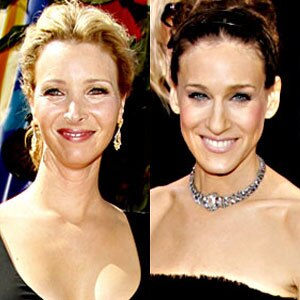
I can't wait to watch on March 5, 2010.
Produced by Lisa Kudrow and her production company, Is or Isn't Entertainment, in collaboration with Wall to Wall Entertainment, "Who Do You Think You Are?" explores the roots of Kudrow, Sarah Jessica Parker, Matthew Broderick, Spike Lee, Susan Sarandon, Brooke Shields and Emmitt Smith. The show is an adaptation of the hit BBC series.
Read the NBC and Ancestry Press Release
Read more...
Wednesday, February 24, 2010
Tracing Your Family History
Unfortunately I missed the episode but here is a clip from Martha The Martha Stewart Show. Click on the title of this post-entitled "Tracing Your Family History". Enjoy!
Sunday, February 21, 2010
Microfilm at local LDS Family History Centres
Birth records are indexed from 1869 to 1907
Marriage records are available from 1869to 1922
Death records from 1869 to 1932.
Birth, marriage and death documentation began in 1869, which can be found at the Ontario Archives that can be borrowed through your local library. http://www.genhomepage.com/FHC/Canada.html
This site can be complicated but it is fun to get the info you are looking for but could not find in any other documents through this resource.
Marriage records are available from 1869to 1922
Death records from 1869 to 1932.
Birth, marriage and death documentation began in 1869, which can be found at the Ontario Archives that can be borrowed through your local library. http://www.genhomepage.com/FHC/Canada.html
This site can be complicated but it is fun to get the info you are looking for but could not find in any other documents through this resource.
Thursday, February 4, 2010
Give Credit Where Credit is Due!
Just recently I found that someone took the pictures I posted on a family friend's Family Tree and claimed them as thier own. I WAS STUNNED! I was shocked, I was horrified!
I could not allow this to happen so I decided that some of the pic's were more private than others and asked the person to delete them from their computer and family tree. I did originally post them for the family friend and his father to enjoy them because the father actually knew the people in the pic's who have passed away since.
This person is such a distant relative that they don't even know the people in the pic's or even knew they existed until I contacted them and introduced myself as a relative.
Am I right in doing this? Maybe not, I don't know!
I could not allow this to happen so I decided that some of the pic's were more private than others and asked the person to delete them from their computer and family tree. I did originally post them for the family friend and his father to enjoy them because the father actually knew the people in the pic's who have passed away since.
This person is such a distant relative that they don't even know the people in the pic's or even knew they existed until I contacted them and introduced myself as a relative.
Am I right in doing this? Maybe not, I don't know!
Friday, January 29, 2010
Journal Entry ~ November 2000
When filling in my tree I made sure to include first, last, and middle names, birth, marriage, death dates and places in which they occurred. For future references this allows for quick access to the researched information.
*Important Note: Use maiden name for females if known. Too many times the wife’s maiden name is lost at time of marriage and, unfortunately, it may remain unknown.
There is only one thing I wish I had done differently that would have saved time and frustration and that is to record every piece of information I found and to keep it on file either in my computer data base or my paper files. This would have avoided repeating searches for the same individuals or families, which I found was defeating.
*Note: I found that keeping a record of the information I obtained to alleviate duplicating my searches with best done through charts. I began with a simple chart my uncle had created but as my searching became more in-depth I used the charts found at Ancestry.com. http://www.ancestry.com/trees/charts/researchext.aspx
November 15, 2000
The Hudson Bay Co. era, the late 1700’s early 1800’s in particular have fascinated me for some time. I gravitate towards this period repeatedly, which made me wonder if there was something I needed to uncover.
As I learn about my ancestors I find myself asking new questions. When I searched “Philip Turnor” my eighth great-grandfather I found that he worked with Samuel Hearne. Philip Turnor was born in 1751 in Laleham, Middlesex, England and came to Canada to assist in Cartography for the Hudson Bay Company. Further in my search I found many resources including a book written by these two Hudson Bay surveyors. In the book David Thompson is mentioned along with many others who assisted or learned from the surveyors in charge. Philip Turnor was the first servant hired by the HBC to map Rupert’s Land, he met Alexander Mackenzie and established a Hudson Bay Post in Saskatchewan because he saw the potential of the fur trade there. The significance he represented in our history is documented and I sense he was an accomplished man of that time.
Getting acquainted with the local library system I noticed the collection of Canadian History documentary television series. I scanned through the movies for the 1700’s and noticed David Thomson’s name in the movies description.
To my surprise the documentary touched on the history of Philip Turnor’s and David Thompson’s association. Philip Turnor had a brilliant mathematical mind; he taught David Thompson while recovering from a broken leg, the skills that surveyors needed. David Thompson went on to become well known through his published journals in his surveying skills and findings.
In my research I found that Philip Turnor was married twice, when and where he was born, when he was married, how many children he had, and when and where he died. I find that each search no matter the out come inspires me to keep going.
*Important Note: Use maiden name for females if known. Too many times the wife’s maiden name is lost at time of marriage and, unfortunately, it may remain unknown.
There is only one thing I wish I had done differently that would have saved time and frustration and that is to record every piece of information I found and to keep it on file either in my computer data base or my paper files. This would have avoided repeating searches for the same individuals or families, which I found was defeating.
*Note: I found that keeping a record of the information I obtained to alleviate duplicating my searches with best done through charts. I began with a simple chart my uncle had created but as my searching became more in-depth I used the charts found at Ancestry.com. http://www.ancestry.com/trees/charts/researchext.aspx
November 15, 2000
The Hudson Bay Co. era, the late 1700’s early 1800’s in particular have fascinated me for some time. I gravitate towards this period repeatedly, which made me wonder if there was something I needed to uncover.
As I learn about my ancestors I find myself asking new questions. When I searched “Philip Turnor” my eighth great-grandfather I found that he worked with Samuel Hearne. Philip Turnor was born in 1751 in Laleham, Middlesex, England and came to Canada to assist in Cartography for the Hudson Bay Company. Further in my search I found many resources including a book written by these two Hudson Bay surveyors. In the book David Thompson is mentioned along with many others who assisted or learned from the surveyors in charge. Philip Turnor was the first servant hired by the HBC to map Rupert’s Land, he met Alexander Mackenzie and established a Hudson Bay Post in Saskatchewan because he saw the potential of the fur trade there. The significance he represented in our history is documented and I sense he was an accomplished man of that time.
Getting acquainted with the local library system I noticed the collection of Canadian History documentary television series. I scanned through the movies for the 1700’s and noticed David Thomson’s name in the movies description.
To my surprise the documentary touched on the history of Philip Turnor’s and David Thompson’s association. Philip Turnor had a brilliant mathematical mind; he taught David Thompson while recovering from a broken leg, the skills that surveyors needed. David Thompson went on to become well known through his published journals in his surveying skills and findings.
In my research I found that Philip Turnor was married twice, when and where he was born, when he was married, how many children he had, and when and where he died. I find that each search no matter the out come inspires me to keep going.
Subscribe to:
Posts (Atom)